

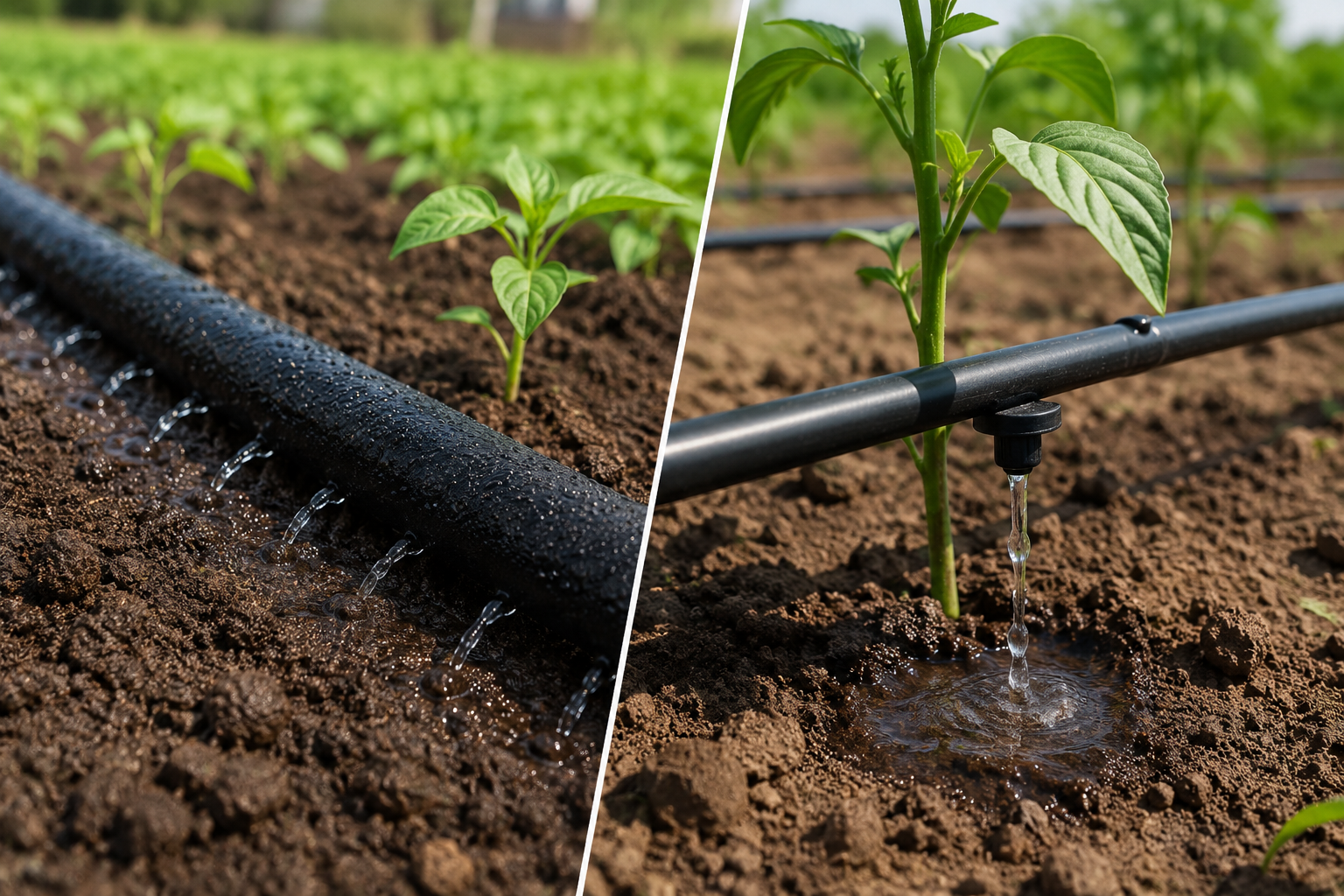
Efficient water management plays a critical role in modern agriculture, landscaping, greenhouse cultivation, and commercial irrigation projects. Among the most widely used irrigation methods today are porous pipe irrigation systems and drip irrigation systems. Both are designed to conserve water and improve plant health, but they operate differently and offer unique advantages depending on the application.
Understanding the differences between these two irrigation methods can help property owners, contractors, farmers, and landscapers choose the most effective solution for their needs.
What Is a Porous Pipe Irrigation System?
A porous pipe irrigation system uses specially manufactured pipes with microscopic pores that allow water to seep slowly and evenly into the surrounding soil. Instead of spraying water above the ground, the system delivers moisture directly to the root zone through continuous seepage.
This method creates consistent underground hydration while minimizing water evaporation and runoff. Many industries prefer a porous irrigation system because of its ability to maintain uniform soil moisture over large planting areas.
Porous irrigation pipes are commonly used in:
- Agricultural fields
- Landscaping projects
- Greenhouses
- Commercial gardens
- Turf irrigation systems
- Soil moisture management applications
What Is Drip Irrigation?
Drip irrigation is a system that delivers water through small emitters positioned at specific intervals along irrigation tubing. Each emitter releases water slowly near the base of individual plants.
This irrigation method is designed for targeted watering and is especially useful for row crops, container plants, and gardens where plants require precise water delivery.
Drip systems are widely used because they reduce water waste compared to traditional sprinklers and allow growers to control watering schedules efficiently.
Key Differences Between Porous Pipe and Drip Irrigation
Although both systems focus on water conservation, they differ significantly in operation, coverage, maintenance, and application.
Water Distribution Method
Porous pipe irrigation releases water continuously through the entire surface of the pipe. This creates even soil moisture distribution across the planting area.
Drip irrigation, on the other hand, delivers water only through designated emitters. Moisture is concentrated around specific points rather than spread uniformly.
For projects requiring broader underground hydration, porous pipes often provide better consistency.
Coverage Area
Porous irrigation systems are highly effective for:
- Long planting beds
- Lawn irrigation
- Landscape areas
- Continuous root zones
- Subsurface watering systems
Drip irrigation works better for:
- Individual plants
- Vegetable rows
- Potted plants
- Orchards with spaced trees
- Controlled irrigation zones
The ideal irrigation pipe system depends largely on crop type, spacing, and landscape design.
Water Efficiency Comparison
Both irrigation methods are considered water-efficient alternatives to overhead sprinklers. However, porous pipe irrigation can sometimes provide better moisture retention because water seeps directly into the soil over a larger surface area.
Drip irrigation may lose efficiency if emitters become clogged or unevenly distributed. Porous systems also help reduce dry patches by maintaining more balanced soil hydration.
Installation Complexity
Drip irrigation systems typically require careful emitter placement and additional connectors. Depending on the layout, installation can become more labor-intensive.
Porous pipe systems are often simpler to install over large continuous areas because the entire pipe surface distributes water naturally.
For commercial irrigation projects and underground watering networks, porous pipes can reduce installation complexity while improving coverage.
Maintenance Requirements
Maintenance is another important factor when comparing drip irrigation alternatives.
Drip Irrigation Maintenance
Drip systems require regular inspection because emitters can clog due to mineral deposits, debris, or sediment buildup. Damaged emitters may also create uneven watering patterns.
Porous Pipe Maintenance
Porous irrigation pipes generally have fewer components and no individual emitters. With proper water filtration and pressure regulation, they often require less maintenance over time.
Routine flushing and clean water supply help extend system lifespan and maintain consistent seepage.
Soil Compatibility
Different soil types affect irrigation performance.
Porous Pipe Systems
Porous irrigation performs especially well in soils that benefit from slow, continuous moisture release. The system encourages deep root growth and stable soil hydration.
Drip Irrigation Systems
Drip irrigation is effective in areas where targeted watering is necessary or where plants are widely spaced.
Proper irrigation design should always consider:
- Soil texture
- Drainage capacity
- Root depth
- Water retention ability
Which Irrigation System Is Better for Agriculture?
For large-scale agriculture and landscape irrigation, porous pipe systems are often preferred because they provide broader water distribution and improved underground moisture consistency.
Drip irrigation remains highly useful for crops that require precise plant-by-plant watering.
In many cases, the best solution depends on:
- Crop type
- Land size
- Water availability
- Installation budget
- Long-term maintenance goals
Many agricultural and commercial users choose porous irrigation systems because they support sustainable water management while reducing operational costs.
Sustainability and Environmental Benefits
Modern irrigation systems must balance productivity with environmental responsibility. Both porous pipes and drip irrigation reduce water waste compared to traditional flood irrigation methods.
However, porous pipe irrigation systems can offer additional environmental advantages through:
- Reduced evaporation
- Lower runoff
- Better soil moisture balance
- Improved groundwater efficiency
- Reduced weed growth
These benefits make porous irrigation increasingly popular in sustainable farming and landscaping projects.
Choosing the Right Irrigation Pipe System
Selecting the right irrigation pipe solution requires understanding the specific needs of the project. Factors such as crop spacing, soil conditions, water pressure, and irrigation goals all influence system performance.
Porous pipe irrigation is ideal for projects requiring continuous underground hydration and broader soil coverage, while drip irrigation is better suited for targeted watering applications.
Businesses and contractors looking for long-term irrigation efficiency often invest in advanced porous irrigation infrastructure to improve water conservation and simplify maintenance across agricultural and commercial environments.