

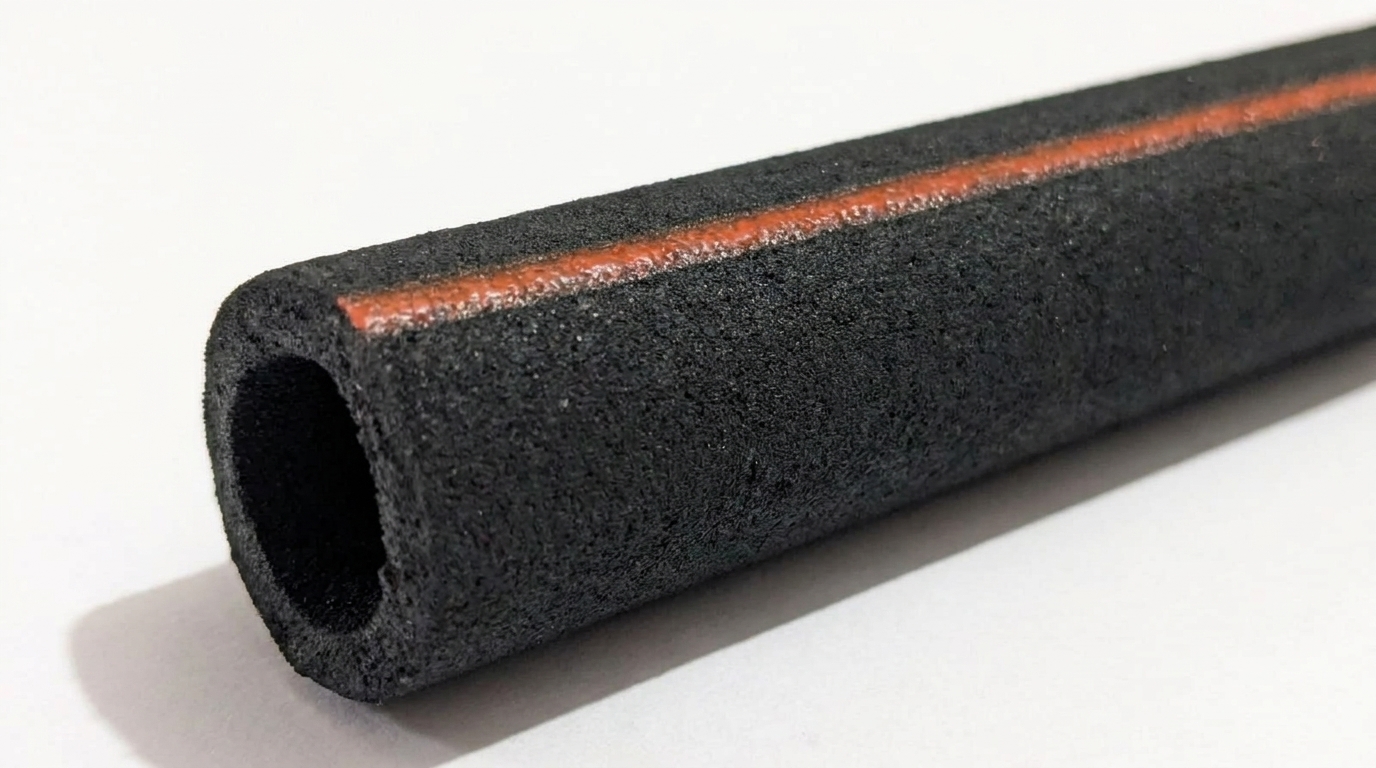
Watering a garden, landscape or planted area is not always as simple as running a hose across the ground. Traditional irrigation methods can sometimes distribute water unevenly, leaving some areas too wet while others remain dry.
Irrigate Porous Pipe irrigation takes a different approach. Instead of releasing water from individual emitters, the pipe allows water to gradually move through its porous surface and into the surrounding soil. This creates a slow and consistent method of water distribution around the areas that need it.
But how does the system actually work, and when is it a practical choice?
What Is Irrigate Porous Pipe Irrigation?
Irrigate Porous Pipe irrigation System is a low-flow irrigation system designed to distribute water gradually along the length of the pipe.
When water enters the system, it moves through the specially manufactured pipe wall. Small openings across the surface allow moisture to reach the surrounding soil rather than releasing water from only a few points.
Because water is delivered close to the soil surface or root zone, the system can provide more consistent moisture across a larger area.
How Does Irrigate Porous Pipe Irrigation Work?
The basic principle is straightforward.
Water is supplied into the irrigation line under controlled pressure. As water travels through the pipe, it slowly passes through the porous material and enters the surrounding soil.
This makes the system particularly useful where you want slow water release, even irrigation and root-zone watering.
The exact performance depends on factors such as water pressure, pipe layout, soil type, installation depth and the overall irrigation design.
Why Is Irrigate Porous Pipe Useful for Even Water Distribution?
One of the main advantages of Irrigate Porous Pipe irrigation is that water can be distributed along a continuous length instead of being concentrated around individual outlets.
This can be useful for:
- Garden beds
- Landscaped areas
- Planting strips
- Lawns and groundcover
- Nurseries
- Root-zone irrigation
- Large planted areas
The gradual release of moisture can also reduce the need for frequent surface watering, depending on the soil and application.
Is Irrigate Porous Pipe Better Than Conventional Irrigation?
There is no single irrigation system that works best for every situation.
Drip irrigation, sprinkler systems and Irrigate Porous Pipe irrigation each have different applications. Drip systems use individual emitters to deliver water at specific points, while sprinkler systems distribute water over a wider surface area.
Irrigate Porous Pipe is more suited to situations where continuous, low-flow water distribution along a planting area is desirable.
The right choice depends on the size of the area, plant requirements, soil conditions, available water pressure and installation requirements.
Where Can Irrigate Porous Pipe Irrigation Be Used?
Irrigate Porous Pipe can be considered for a range of landscaping and horticultural applications where controlled soil moisture is important.
It can be installed above ground or below the soil depending on the project requirements. Underground installation can be particularly useful when the aim is to deliver water closer to the root zone while keeping the irrigation system out of sight.
Before installation, it is important to consider pipe spacing, soil characteristics, water pressure and the amount of water required by the plants.
How Do You Choose the Right Irrigation System?
The best irrigation solution starts with understanding the application rather than choosing a product based only on its name.
Consider the planting area, soil type, water source, required flow rate and whether the system needs to be installed above or below ground.
For projects requiring gradual and consistent moisture distribution, Irrigate Porous Pipe irrigation can be a practical option worth considering.
A properly designed system can make irrigation more manageable while providing plants with a steady supply of moisture where it is needed.