

When dealing with a subterranean termite infestation, property owners are often shocked to learn that the millions of destructive pests eating their home all originate from a single, highly organized underground colony. Because the nest is often located deep underground or far away from the structure, simply spraying the visible bugs does absolutely nothing to stop the source.
To truly protect a property, you have to strike at the heart of the colony. This is exactly where the termite bait station excels.
Instead of acting as a traditional chemical barrier that repels pests, a termite baiting system operates as a biological Trojan horse. It uses the termites’ own natural foraging behaviors against them, turning worker termites into carriers that deliver a lethal dose directly to the queen. In this comprehensive guide, we will explore the fascinating science behind how termite bait stations work and why they are a vital tool in modern pest management.
What is a Termite Bait Station?
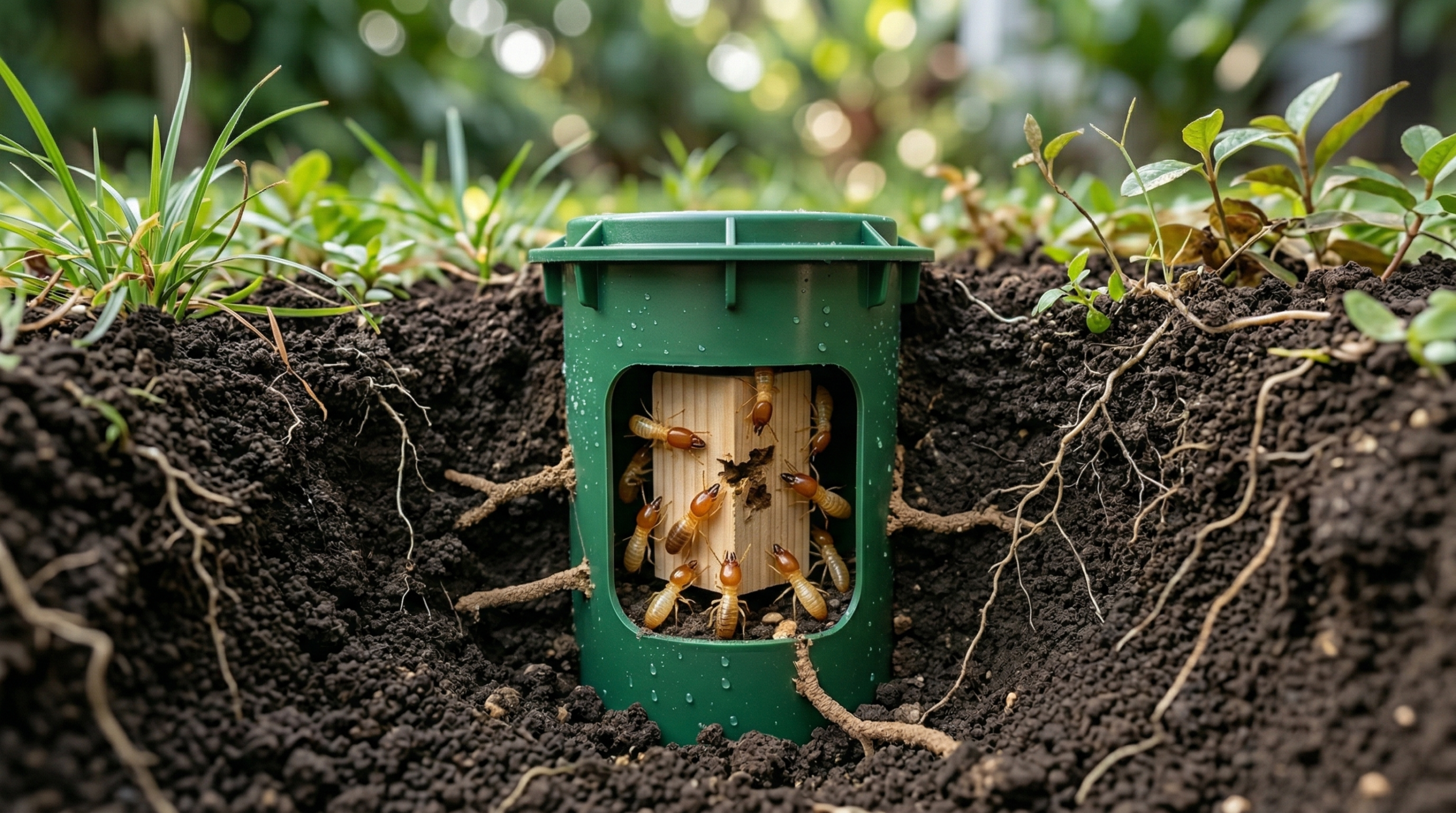
A termite bait station is a cylindrical plastic housing that is strategically installed into the ground around the perimeter of a property. The station itself features precisely engineered slits along its sides, allowing foraging insects easy access to the interior chamber while keeping the contents secure from pets, children, and weather elements.
Inside this protective housing, pest control professionals place a cellulose-based material. Cellulose is the organic compound found in wood and plant fibers, it is the primary food source for termites.
Initially, these stations may just contain a non-toxic monitoring block to check for activity. Once termite presence is confirmed, the monitor is swapped out for the actual “bait”, a highly attractive cellulose matrix laced with a slow-acting, lethal active ingredient.
The Science of Elimination: How Termite Bait Works
The success of a termite bait station relies entirely on patience. If the bait killed the termites instantly upon consumption, dead insects would pile up near the station, and the rest of the colony would quickly learn to avoid the area. Instead, the process unfolds in three distinct, calculated phases.
Phase 1: Foraging and Discovery
Subterranean termites are blind, but they are relentless foragers. Worker termites continuously fan out from their central nest in a starburst pattern, searching for new sources of cellulose. They build complex networks of underground mud tubes to travel safely.
When these blind workers bump into a termite bait station installed in the soil, they enter through the side slits and discover the highly palatable cellulose matrix inside. Because the bait is designed to be even more attractive than the structural timber of your home, the workers immediately begin to feed.
Phase 2: The Trophallaxis Process (Sharing the Bait)
This is where the Trojan horse effect begins. Worker termites are the only caste within the colony capable of digesting cellulose. They must process the food and regurgitate it to feed the rest of the colony, including the soldiers, the nymphs (babies), and the critical reproductive king and queen. This process of sharing liquid food, mouth-to-mouth or anus-to-mouth, is called trophallaxis.
The worker termites consume the slow-acting bait and carry it back to the nest in their guts. They then share this tainted food supply with hundreds of thousands of other colony members, completely unaware that they are distributing a lethal substance.
Phase 3: Disruption of the Molting Cycle (The IGR Effect)
The active ingredient in most modern termite baits is a chemical compound known as an Insect Growth Regulator (IGR). IGRs do not act as traditional nerve poisons. Instead, they disrupt the biological development of the insect.
Termites, like all insects, have an exoskeleton. As they grow, they must periodically shed this hard outer shell and grow a new one—a process called molting. The IGR in the bait inhibits the termite’s ability to synthesize chitin, the structural material needed to form a new exoskeleton.
When the time comes for the termite to molt, it simply cannot. The insect becomes trapped in its old skin and dies. Because the worker termites are constantly molting, they are the first to perish. As the worker caste collapses, the entire colony loses its ability to gather food. Without workers to feed them, the soldiers, the nymphs, and ultimately the queen starve to death, resulting in total colony elimination.
Strategic Placement: Where to Install Termite Baits
For a termite baiting system to be effective, the stations must be placed where foraging workers are most likely to find them.
Pest control professionals typically install stations at intervals of 10 to 20 feet around the entire exterior perimeter of the building. They are usually placed about 2 to 4 feet away from the foundation to avoid areas where the soil may have been treated with repellent chemicals in the past.
Special attention is given to “conducive conditions”, areas with high moisture or buried wood that naturally attract termites. You will frequently see bait stations placed near air conditioning drip lines, downspouts, old tree stumps, and mulch beds.
Termite Bait Stations vs. Proactive Barrier Systems
While termite bait stations are incredibly effective at destroying active colonies, they are fundamentally a reactive or monitoring solution. The termites must find the station and consume the bait before any protection occurs.
For property owners who prefer a strict, proactive defense, ensuring termites never even get close to the structure, a continuous chemical barrier is often the preferred choice. For new constructions, implementing a heavy-duty anti-termite pipe reticulation system provides an impenetrable, replenishable shield beneath the foundation.
Unlike bait stations, which require constant monitoring and bait replenishment, a porous pipe system allows professionals to saturate the foundational soil with termiticide, physically blocking any termite advance. It is highly recommended to assess your property type (new build vs. existing structure) when choosing between a monitoring bait system and a barrier-first approach.
The Final Word on Termite Colony Elimination
Termite bait stations represent a massive leap forward in targeted, environmentally conscious pest control. By utilizing the insect’s natural biology and social feeding behaviors, these systems can silently and systematically wipe out colonies numbering in the millions. Whether used as a standalone treatment for existing homes or in conjunction with structural barriers, bait stations remain a critical asset in the ongoing battle against subterranean termites.