

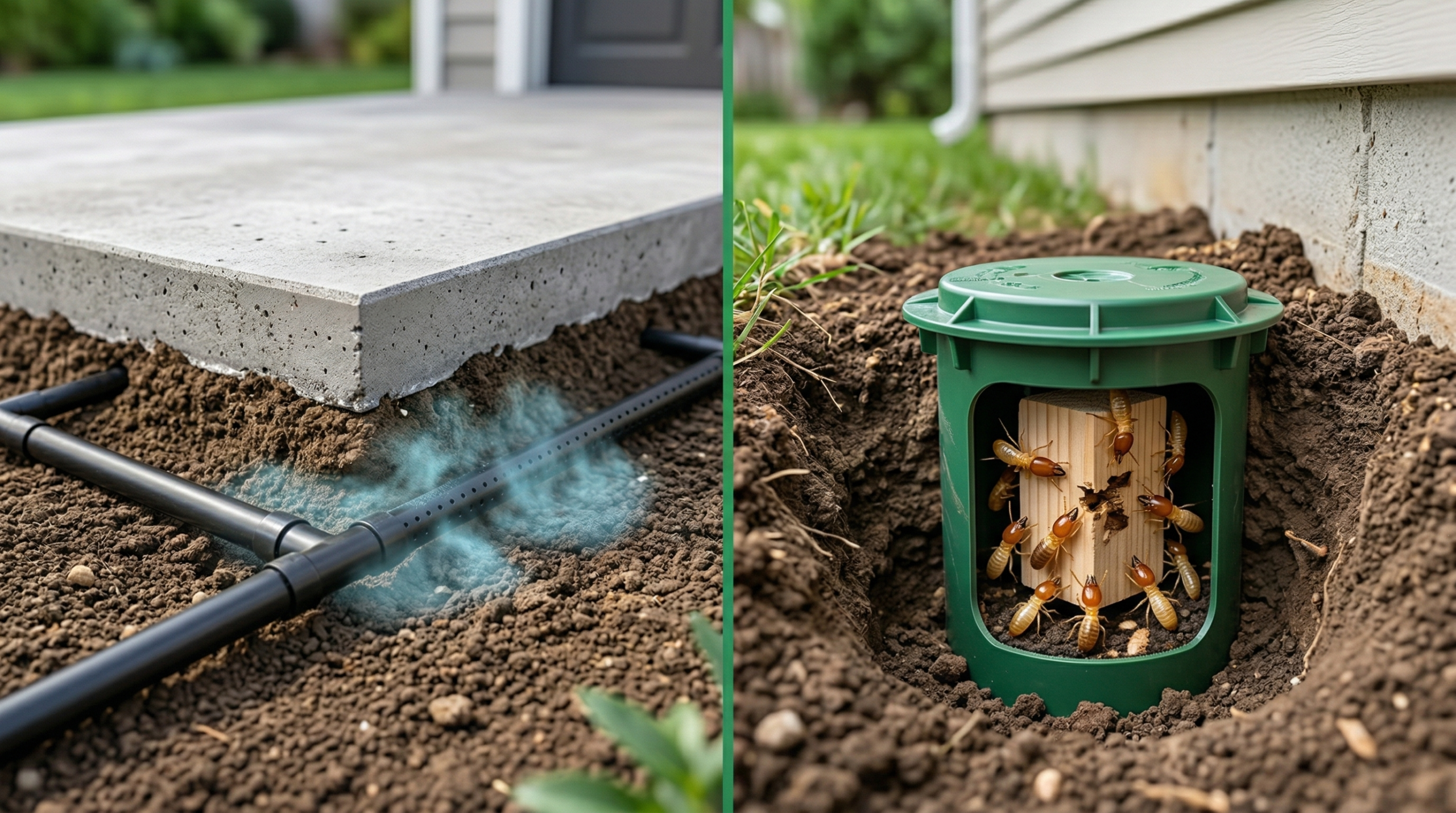
When it comes to protecting a property from subterranean termites, the stakes are exceptionally high. These silent destroyers can go unnoticed for years, causing catastrophic structural damage from beneath the concrete slab.
In the world of professional pest management, two primary strategies dominate the market: Pipe Reticulation Systems and Termite Bait Stations. Both approaches are effective, but they operate on fundamentally different principles and are suited for different scenarios.
A pipe reticulation system represents the gold standard in preventative chemical barrier technology. In contrast, termite baiting is a reactive strategy that monitors and eliminates colonies already foraging near the structure.
Which defense is right for your property? In this guide, we will break down the crucial differences, advantages, and ideal applications of both systems to help you make an informed decision.
1. Timing: Pre-Construction vs. Post-Construction
This is the single most defining factor.
The primary requirement for installing an effective pipe reticulation system is access. The entire grid of porous tubing must be strategically laid in the soil or sand foundation trenches after footings are set, but before the concrete slab is poured. It is hardwired into the building’s infrastructure during construction. Once the floor is finalized, retrofitting a reticulation system is practically impossible.
On the other hand, termite bait stations are explicitly designed for post-construction application. They are installed on existing properties, usually along the exterior perimeter, by boring small holes into the soil. Baiting is the ideal solution if you have an older home that was not built with built-in termite defenses.
The Bottom Line: If you are building a new property, you have the option for both. If you are protecting an existing home, baiting is likely your only practical choice.
2. Methodology: Continuous Barrier vs. Intermittent Interception
Pipe Reticulation System (Barrier Defense)
This system focuses on total exclusion. Once the pipes are installed, a high-quality termiticide is pumped into the network. This chemical saturates the entire foundation perimeter and internal crucial points (like plumbing penetrations), creating a continuous, gap-free chemical barrier within the soil itself.
The goal is to create a “no-go zone” beneath your feet. When foraging subterranean termites approach the foundation, they encounter the treated soil. Since the barrier is continuous (thanks to precise porous pipe design), there are no gaps for them to find, and they are repelled or eliminated.
Termite Bait Stations (Monitoring Defense)
Baiting is a more targeted and often slower process. Technicians place non-toxic wooden monitors inside tamper-proof cylinders every 10–20 feet around the house. These do not repel termites; instead, they act as early warning systems.
Pest control operators must return regularly (often quarterly or monthly) to inspect the stations. When active termite foraging is confirmed in a station, the wooden monitor is replaced with specialized termite bait that contains a powerful, slow-acting insect growth regulator (IGR). The termites consume this bait and, crucial to the strategy, share it with the rest of the colony. The IGR prevents the termites from molting, which ultimately leads to the collapse of the entire localized colony.
3. Maintenance: Long-Term Recharge vs. Constant Monitoring
Reticulation Maintenance
The maintenance of a pipe reticulation network is infrequent and low-disruption. Modern termiticides are incredibly durable, and a single, high-pressure saturation will typically provide reliable protection for 3 to 5 years, depending on soil conditions and chemical lifespan.
When it is time for maintenance, a technician simply locates the external junction boxes, attaches their specialized pump, and introduces a fresh charge of chemical. It requires no drilling, no internal entry, and no messy cleanup. It is a set-and-forget approach for several years at a time.
Bait Station Maintenance
A baiting system requires significantly more consistent human interaction. The regular inspection cycle is paramount. If stations go uninspected for six months and a colony bypasses them, you have zero protection.
Furthermore, if the stations are active with termites, they may need inspections and bait replenishment as often as every 30 days until the colony is eliminated. This continuous monitoring makes the ongoing labor costs for baiting significantly higher than the recharge costs for reticulation over the lifespan of the property.
4. Upfront and Ongoing Costs
Reticulation Costs
- Upfront: Moderate installation cost. The cost is essentially a small percentage of the overall foundation work for a new build. You must pay for the physical pipe system and the initial termiticide saturation.
- Ongoing: Low. The primary expense is the cost of the professional termiticide recharge every 3–5 years. There are no monthly service contracts required.
Bait Station Costs
- Upfront: Minimal to low installation cost (labor of installing the stations). However, most providers will bundle the physical stations with a mandatory first-year service contract.
- Ongoing: High. The long-term cost of termite baiting is driven by the regular inspections. The service contract must be renewed annually to ensure active monitoring.
Final Verdict: Which is Right for You?
Choose a Pipe Reticulation System If:
- You are in the Pre-Construction Phase: It is the single most reliable long-term investment you can make during the foundation stage.
- You Want Zero Structural Damage During Maintenance: Future recharges will never require drilling into your foundation or finished flooring.
- You Prioritize Continuous, Proactive Exclusion: You want a physical, unbreakable barrier, not just monitors.
- You Value Low Long-Term Maintenance: You prefer an occasional recharge over monthly inspections.
Choose Termite Bait Stations If:
- You Own an Existing Property: You cannot access the soil beneath your existing slab for reticulation.
- You Have Sensitive Soil or Environmental Concerns: You prefer localized, non-toxic bait to widespread subterranean soil treatments.
- You Are Dealing with an Active Infestation Away from the Structure: Baiting excels at destroying foraging colonies that may be threatening structures but are not yet within the immediate foundation footprint.